
A History
With all your donations being doubled, even a small donation makes a big difference. Our Grade A Listed Palm Houses have been an iconic part of Scotland's heritage for over 200 years.
We need your help
Even a small donation will make a difference
With all your donations being doubled, even a small donation makes a big difference. Our Grade A Listed Palm Houses have been an iconic part of Scotland's heritage for over 200 years.
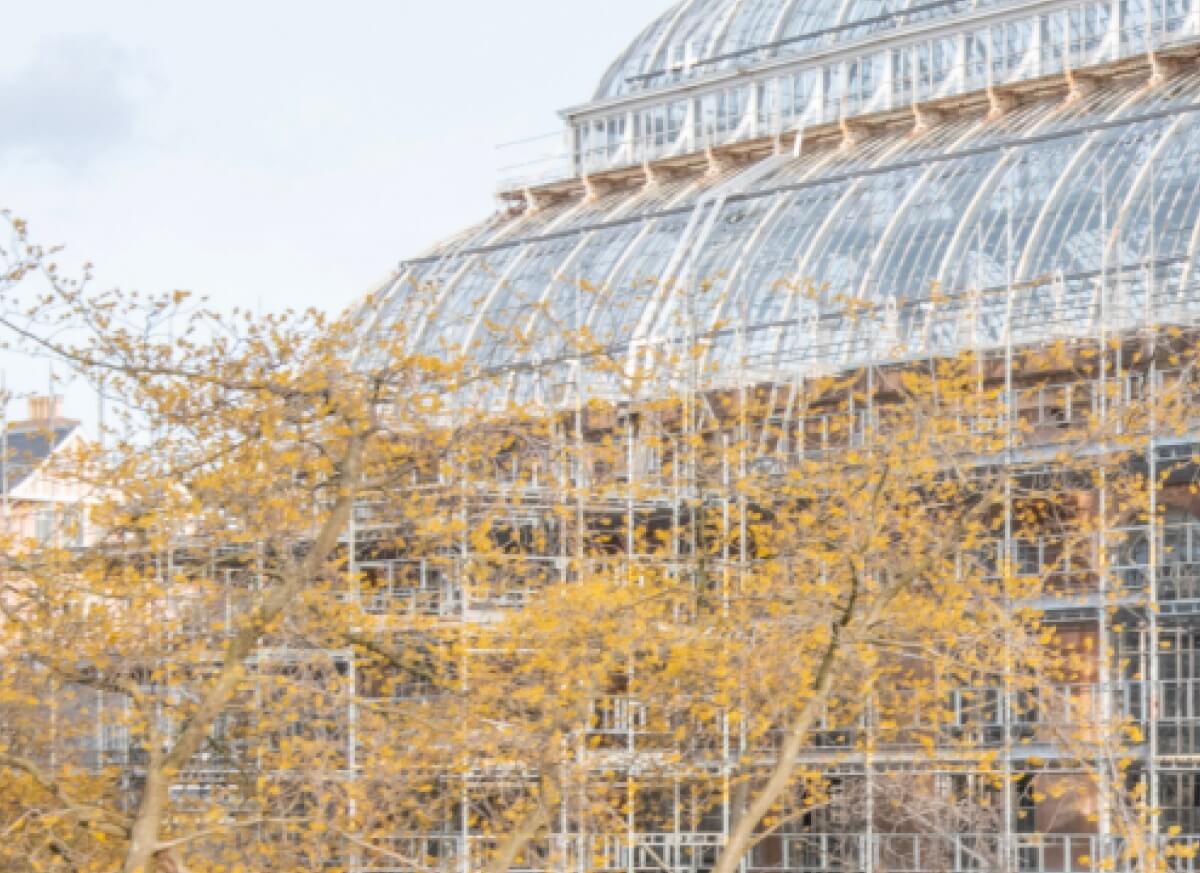
However, exposed to the elements, their condition has severely deteriorated. The Palm Houses are a vital part of our work to explore and conserve plant life.
Find out more about this projectWe need your help
With all your donations being doubled, even a small donation makes a big difference. Our Grade A Listed Palm Houses have been an iconic part of Scotland's heritage for over 200 years.
However, exposed to the elements, their condition has severely deteriorated. The Palm Houses are a vital part of our work to explore and conserve plant life.
Donate
We need your help
Even a small donation will make a difference
With all your donations being doubled, even a small donation makes a big difference. Our Grade A Listed Palm Houses have been an iconic part of Scotland's heritage for over 200 years.
However, exposed to the elements, their condition has severely deteriorated. The Palm Houses are a vital part of our work to explore and conserve plant life.
Donate
Palm houses timeline
-
1820 - 1824
The Garden Moves
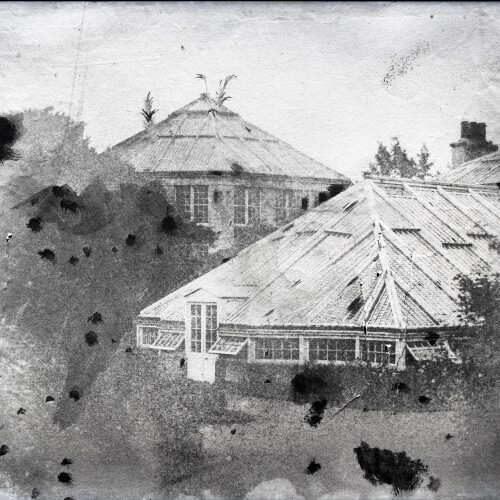
The garden moves from Leith Walk to Inverleith.
-
1834
The First Palm House
With more space needed for new exotic plants, the first of the Palm Houses is built. An irregular octagon, it is 18m wide.
-
1855 - 1858
A New Palm House
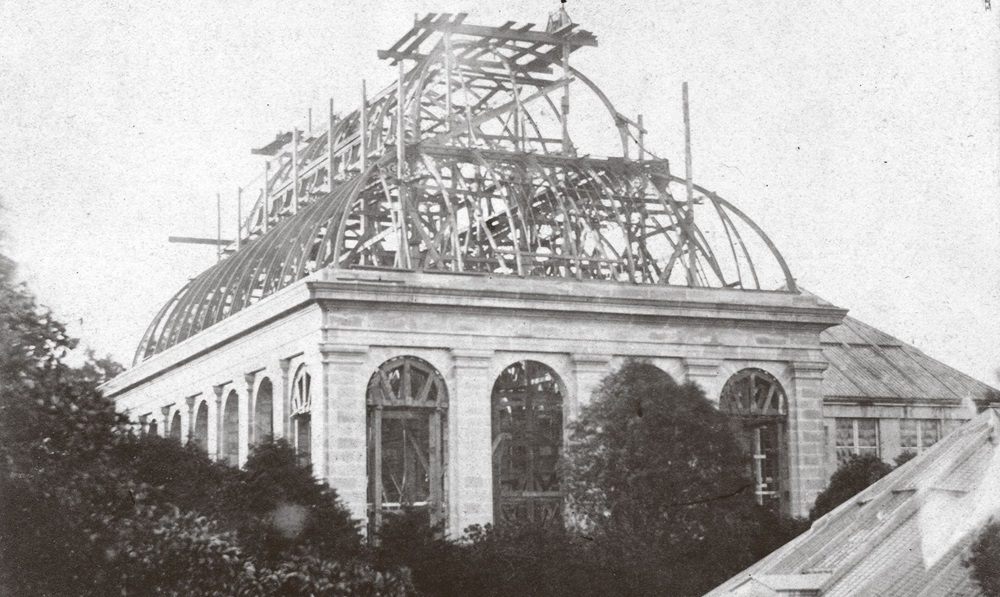
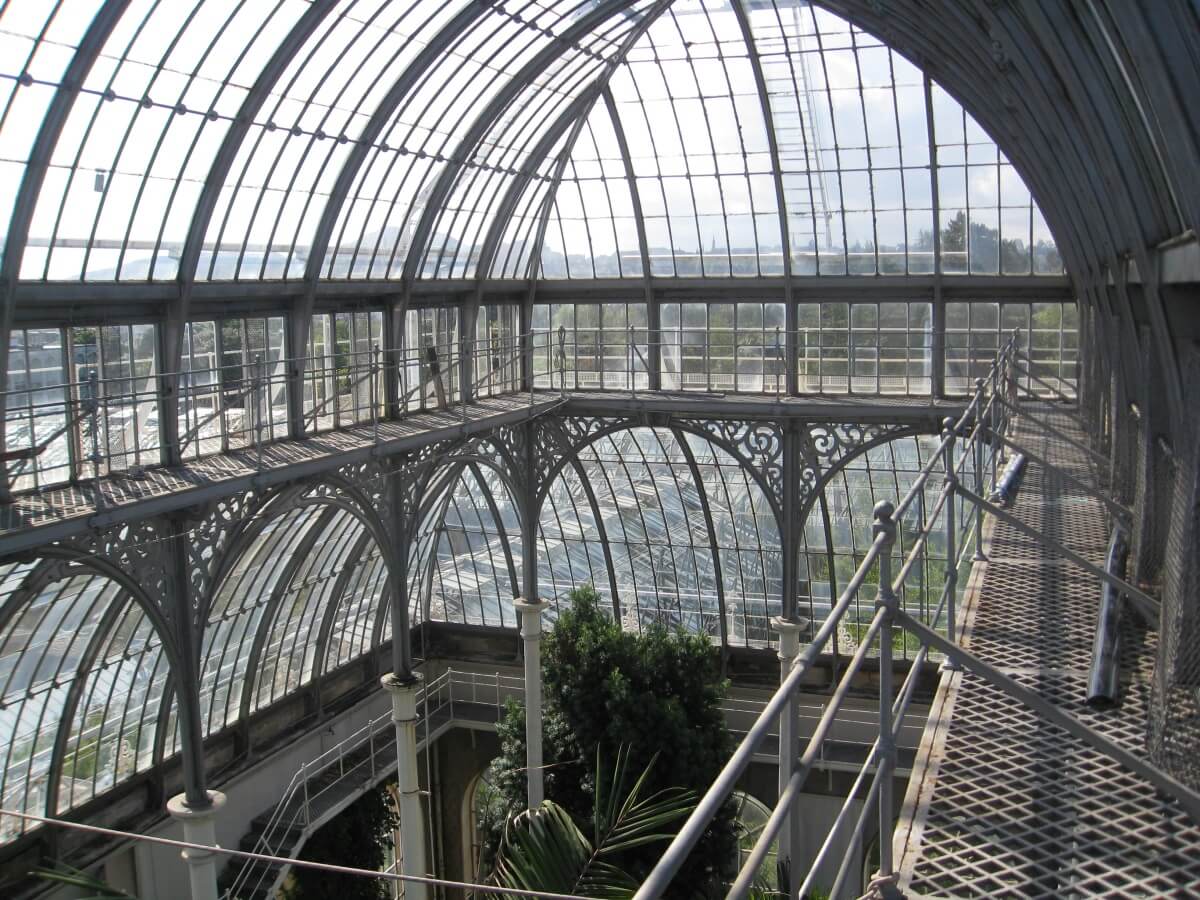
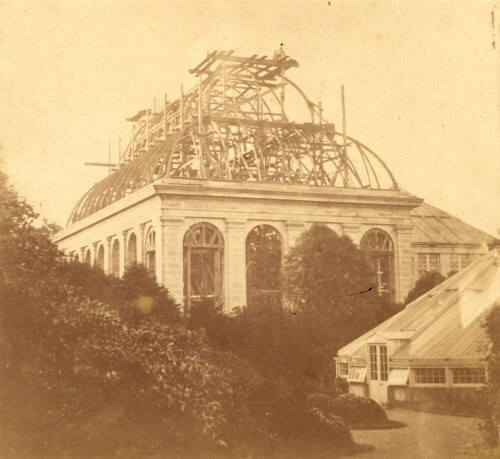
As several trees send their leaves through the roof, parliament agrees to provide £6,000 for a new Palm House to be designed by Robert Matheson. Built of sandstone from a quarry at Bishopbriggs, the façade is “relieved by pilasters and entablature of the Tuscan style”. The roof is formed of curvilinear iron rafters forming a dome of two stages. Matheson will go on to build the fountain in the courtyard of Holyrood Palace.
-
1859
A Partition Is Built
A partition is built between the two Palm Houses.
-
1860
A New Roof
A new roof made of cast iron and glass matching the dome of the new Palm House is built on the old one.
-
1874
Creating One Tropical Zone
The partition is removed to create one tropical zone. The Sabal palm - the oldest specimen in the collection - is moved back to the old Palm House, its fourth move since 1820, though it is still not planted in the ground.
-
1892 - 1893
Improving Light Transmission
'Skirts' are added to the old Palm House and seven stone pillars are replaced by slim cast iron ones to improve light transmission. Around the same time, the partition is reinstated and the Sabal palm finally planted in the old (or Tropical) Palm House.
-
1869
Remodelling
The Palm Houses are remodelled as part of the tercentenary celebrations. This includes the removal of the 'skirt' from the Tropical House. The formal rectangular beds with the red ash paths in the Temperate House are re-landscaped, greatly increasing the planting space.
-
1876
The Reopening
Both Palm Houses reopen after being closed for renovations and heating upgrades.
-
2005
Windows On The World
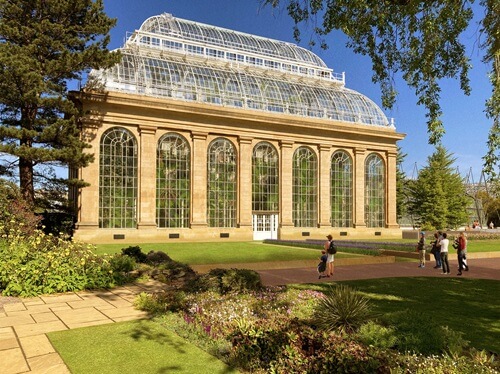
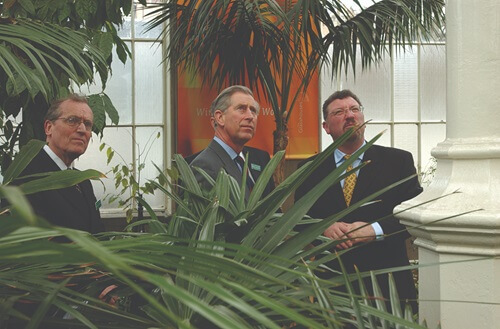
Prince Charles opens the new glasshouse experience, 'Windows on the World'. The Temperate Palm House has been opened up to reveal architecture previously hidden from view. There is a new reception desk made of wood from the removed trees.
-
2017
Envisaging A New Visitor Experience
Plans are laid for the Palm Houses and 1960s glasshouses to be emptied, renovated and replanted following their unsustainable degradation. A new visitor experience is envisaged, showcasing the species in our Living Collection.
-
2024
Save The Palm Houses
A major public fundraising campaign launches to support the restoration of the Palm Houses. The work is at the heart of the Edinburgh Biomes Project.